Citizen Advocacy Petition
The Financial Stability &
Consumer Choice Act
Esports wagering is already happening—$673.6 billion wagered annually with illegal operators, $15.3 billion in lost state tax revenue, and zero consumer protections (AGA, 2025). With 16,000+ collegiate esports athletes and 200,000+ high school players in the pipeline, an entire generation is being trained for an industry they can't build businesses in. Stand with us to regulate what's already here, unlock a massive tax revenue stream, and give small businesses and the next generation fair access to the banking system.
The Financial Stability & Consumer Choice Act (FSCC Act) is a proposed legislative framework that has not yet been introduced as a bill in the U.S. Congress. This petition advocates for its introduction and passage.
The Problem
Esports wagering and online gaming are happening whether regulated or not. Americans wager $673.6 billion annually with illegal and unregulated operators (AGA, Aug 2025)—none of it taxed, none of it regulated, none of it protected. Current “high-risk” frameworks block small businesses from accessing the banking system, while states lose $15.3 billion per year in tax revenue to an illegal market that has grown 22% since 2022.

It's already happening. The only question is whether we regulate it — or ignore the revenue.
Systemic Risk to Banks
Banks face disproportionately high chargeback rates when processing transactions for licensed gaming platforms. While the gaming industry average chargeback rate is 0.83% (Chargeblast, 2024)—below Mastercard’s Excessive Chargeback Program threshold of 1.5%—individual high-volume gaming operators can easily exceed this threshold, and the “high-risk” classification itself leads to banking relationships being denied or terminated regardless of individual operator performance. This creates systemic financial risk across a sector employing nearly 1.9 million U.S. workers (BLS, Feb 2026).
The Friendly Fraud Epidemic
Friendly fraud accounts for 40–80% of all e-commerce fraud losses. 72% of customers say convenience has driven them to file a chargeback claim (Chargebacks911 Cardholder Dispute Index, 2025). Nearly half of consumers admit to bypassing merchant contact entirely before filing a dispute. Even when merchants choose to contest these claims, they win approximately 45% of cases—but the net recovery rate across all chargebacks is only ~18% (Chargebacks911, 2025).
De-Banking & Market Access
State-licensed skill-based gaming operators—legally distinct from chance-based gambling under 40+ state laws and UIGEA—are frequently denied banking services due to broad “gaming” categorization. Meanwhile, over 625,000 unregulated “gray machines” generate $30.3 billion in revenue and cost states $9.5 billion in lost tax revenue annually (AGA, Aug 2025). These machines operate without oversight, consumer protections, or any contribution to public coffers—while licensed operators who would generate tax revenue are denied the banking access they need to compete.
The Small Business Barrier
Small businesses entering online gaming and real-money esports face a uniquely stacked deck. With SBA loan denial rates at 45% in 2024 (Forbes/Federal Reserve SBCS) and 38% of small businesses failing due to insufficient capital, emerging operators simply cannot absorb the costs that “high-risk” classification imposes—higher processing fees, rolling reserves, fund holds, and account terminations without notice. Large incumbents have the capital reserves and compliance teams to push through these barriers; small businesses do not. The result is an industry where only well-funded corporations can compete, shutting out the entrepreneurs and innovators who drive job creation and economic growth.
Billions in Lost Tax Revenue
The illegal and unregulated gambling market generates $53.9 billion in annual revenue—31.9% of the total U.S. gaming market—and has grown 22% since 2022 (AGA, Aug 2025). None of this revenue is taxed. Illegal sports betting alone accounts for $84 billion in handle and $1 billion in lost tax revenue. Meanwhile, legal sports betting generated $2.99 billion in state tax revenue in 2024, with tax collections surging 382% from Q3 2021 to Q2 2025 (U.S. Census Bureau, Dec 2025). The esports betting market—projected at $2.8 billion in 2025 (Statista)—is overwhelmingly offshore, with 44% of deposits made via cryptocurrency on unregulated platforms (Business Research Insights). Every dollar wagered illegally is a dollar that generates zero tax revenue.
The Collegiate & Student Barrier
Over 16,000 student-athletes compete in collegiate esports across 280+ varsity programs (NACE, 2025–26), with $50 million in projected scholarships for 2025–26—yet the NCAA refuses to sanction esports, and graduates face a market where “high-risk” banking classification blocks them from building businesses. High school esports participation has doubled since 2020 to over 200,000 registered players (NACE/PlayVS), creating a massive pipeline of talent with no clear path to sustainable income. Students pursuing esports management, broadcasting, event production, and entrepreneurship—fields where 78% of esports program graduates find employment (NACE)—are training for an industry that current legislation actively prevents them from entering as small business owners. The information sector already has the highest first-year business failure rate at 28.4% (BLS/LendingTree, 2025); adding banking barriers on top makes it nearly impossible for young esports entrepreneurs to build sustainable businesses.
Sources: American Gaming Association (Aug 2025), NACE (2025\u201326), NACE/PlayVS, U.S. Census Bureau (Dec 2025), Statista (2025), Business Research Insights, BLS/LendingTree (2025), BLS (Feb 2026), Federal Reserve SBCS (2024), Chargebacks911 (2025), LexisNexis (2025)

16,000+ collegiate athletes. 280+ programs. Zero clear path to building a business.
By The Numbers
Esports wagering is already happening—the only question is whether governments will capture the tax revenue or leave it on the table for illegal operators. Here's what the data shows.
Before & After: The Transformation
The Tax Revenue Opportunity
The proof is already in. Legal sports betting generated $2.99 billion in state tax revenue in 2024, with collections surging 382% from Q3 2021 to Q2 2025 (U.S. Census Bureau, Dec 2025). If all 50 states legalized sports betting, the Tax Foundation estimates an additional $1.6 billion per year at a 10% GGR tax rate (Jan 2026). Meanwhile, the illegal market generates $53.9 billion in revenue with $0 going to state coffers (AGA, Aug 2025). The esports betting market alone is projected at $2.8 billion in 2025 (Statista), with 44% of deposits made via cryptocurrency on offshore platforms (Business Research Insights)—completely outside the tax system. Regulation doesn't create new gambling; it captures tax revenue from activity that is already happening and channels it toward public services, education, and infrastructure.
Sources: American Gaming Association (Aug 2025), U.S. Census Bureau (Dec 2025), Tax Foundation (Jan 2026), Statista (2025), Business Research Insights, BLS (Feb 2026), BEA (Q3 2025)
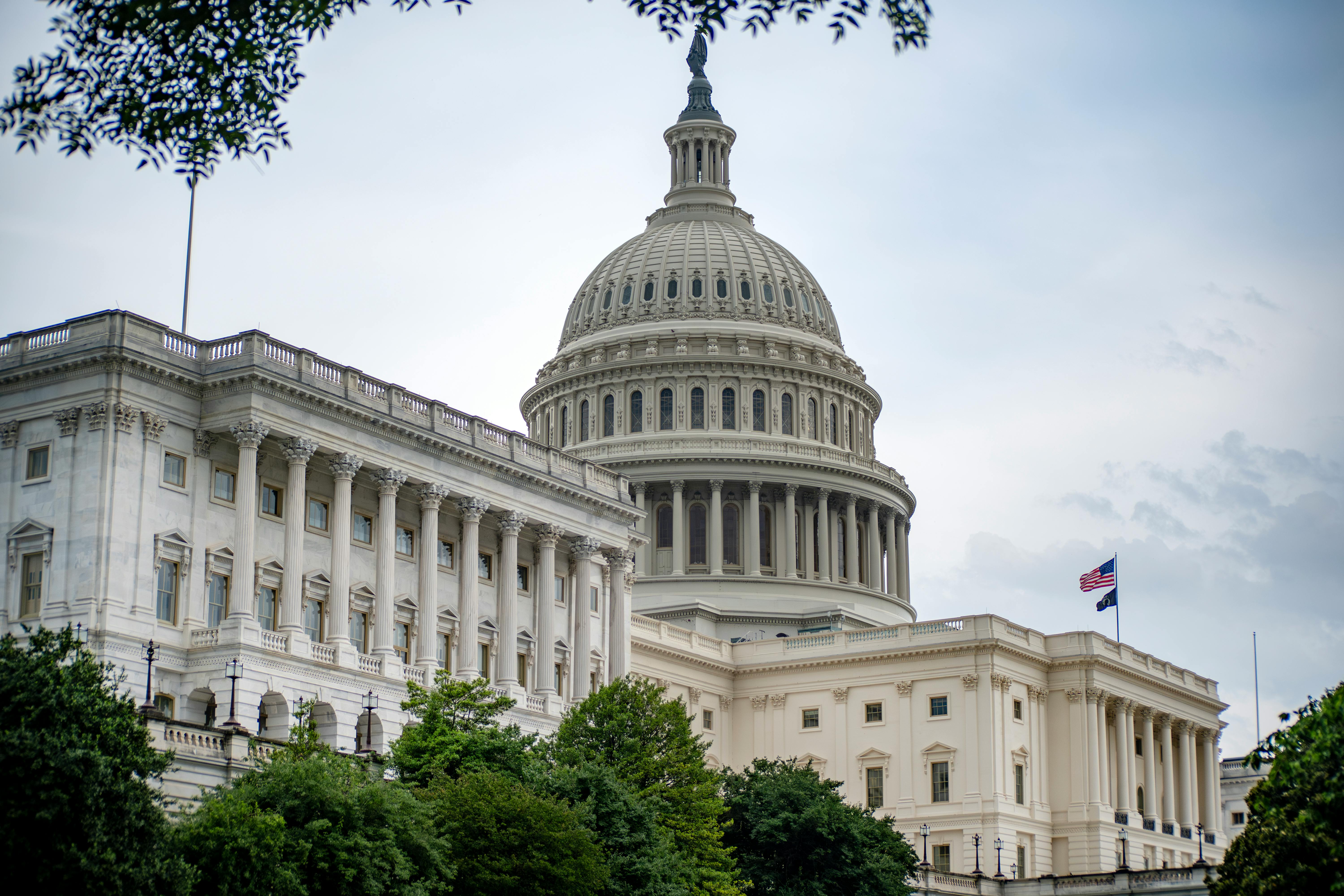
$15.3 billion in lost state tax revenue every year — regulation captures what's already happening.
The Solution
The Chargeback Waiver Program: a voluntary, informed-consent model that protects all parties while preserving consumer choice.
Informed Consent
Consumers voluntarily acknowledge the nature of their transactions before completing a purchase, ensuring full transparency at every step.
Irrevocable Waiver
Once consent is given, consumers waive the right to dispute authorized transactions through chargebacks, eliminating friendly fraud at its source.
Safe Harbor for Banks
Financial institutions gain legal protection when processing these consensual transactions—zero chargeback processing, zero investigation, zero liability.
How the Waiver Program Works
A multi-layered verification and consent system designed for maximum consumer protection and bank security.
Account Creation & KYC
Consumer completes biometric verification (selfie + government-issued ID) during sign-up. Full identity validated before any transaction can occur.
Double Opt-In Consent
Multi-layered consent captured at signup AND again before each deposit. Consumer explicitly acknowledges and accepts the chargeback waiver terms.
Transaction Processing
Payment processed with full consent documentation. Financial institution protected by safe harbor provisions—no risk of chargeback disputes.
Internal Dispute Resolution
If any dispute arises, it is resolved directly between consumer and platform within 15 business days—bypassing the traditional chargeback system entirely.
Implementation Roadmap
Initial operator onboarding and compliance testing
Broader operator adoption and bank partnerships
100+ operators, $250M/month transaction volume
Choice, Not Coercion — A Lifeline for Small Business & State Budgets
This legislation empowers consumers with transparent choices while eliminating the abuse of chargeback systems—and critically, it removes the banking barriers that prevent small businesses from entering online gaming and real-money esports. The current BSA definition of “financial institution” (31 U.S.C. § 5312) was written for land-based casinos with over $1M in gross gaming revenue and has not been updated for modern online skill-based platforms—creating a regulatory gray zone that disproportionately harms small operators who lack the capital to negotiate bespoke banking arrangements. On August 7, 2025, Executive Order 14331 (“Guaranteeing Fair Banking for All Americans”) directed federal agencies to end politicized debanking, and on April 7, 2026, the FDIC and OCC finalized a rule removing “reputation risk” from bank supervision.
The tax revenue case is equally compelling: Americans already wager $673.6 billion annually with illegal operators—generating $53.9 billion in revenue that produces zero tax revenue (AGA, Aug 2025). Meanwhile, legal sports betting alone generated $2.99 billion in state tax revenue in 2024, proving that regulation works. Esports wagering—projected at $2.8 billion in 2025 (Statista)—is happening whether regulated or not.
And the next generation is watching: Over 16,000 collegiate esports athletes compete across 280+ varsity programs (NACE, 2025–26), with $50 million in projected scholarships and 200,000+ high school players in the pipeline. These students are pursuing esports management, broadcasting, event production, and entrepreneurship—yet the “high-risk” banking classification means graduates who want to build esports businesses face the same barriers that block established small operators. A federal safe harbor program doesn't just help today's small businesses—it builds the infrastructure for the next generation of esports entrepreneurs, while unlocking a massive tax revenue stream that currently flows entirely to illegal operators.

The next generation of esports entrepreneurs is ready — if the system lets them build.
Key Benefits
This legislation creates a win-win framework for every stakeholder in the digital payment ecosystem—backed by concrete, measurable outcomes.
For Financial Institutions
- Zero chargeback processing on waiver-covered transactions
- No provisional credits, no arbitration costs, no liability
- Full safe harbor protection from regulatory action
- Clear legal framework eliminates compliance uncertainty
- Restores confidence to process gaming-related payments
For Consumers
- Reliable, uninterrupted access to licensed platforms
- Biometric-verified identity protects against unauthorized use
- Transparent, double opt-in consent at every transaction
- Fast internal dispute resolution vs. 45-90 day chargeback process
- Protection from predatory or unregulated alternatives
For Small Business & the Economy
- Unlocks billions in new tax revenue from activity already happening — $15.3B/yr currently lost (AGA, Aug 2025)
- Legal sports betting already generates $2.99B in state tax (2024) — regulation works, and esports is next
- Removes banking barriers that block small operators from entering the market
- Levels the playing field—small businesses get the same payment access as large incumbents
- Channels $673.6B in annual illegal wagering into licensed, taxable, consumer-protected platforms
- Standardized framework reduces 625K+ gray machine problem, favoring licensed small businesses
- Supports 1.9M U.S. gaming/recreation workers across 99,529 establishments (BLS, Feb 2026)
- Aligns with EO 14331 (Aug 2025) ending politicized debanking of lawful businesses
For Students & Next-Gen Entrepreneurs
- 16,000+ collegiate esports athletes competing across 280+ programs—with no clear path to building a business after graduation
- $50M in projected esports scholarships (2025–26)—training students for an industry that banking barriers block them from entering
- 200K+ high school esports players (doubled since 2020)—a pipeline of talent heading into a market that current policy shuts out
- 78% job placement rate for esports graduates (NACE)—but entrepreneurship remains blocked by “high-risk” classification
- 50+ universities offer esports degrees (management, broadcasting, event production)—graduates deserve a regulated market to build in
- 24% of 18–24 year olds are entrepreneurs (GEM 2023/24)—esports students are ready to build, if the system lets them
- Regulation creates the career infrastructure for the next generation—from collegiate athlete to esports business owner

From collegiate athlete to esports business owner — this legislation builds the bridge.
Sign the Petition
Add your voice to the movement for fair, transparent digital payment legislation.
Spread the Word
Share this petition with your network and help us reach more supporters.